
7 Bid Red Flags That Tell Me You Won't Win
Leading complex bids across construction, infrastructure, engineering and renewable energy, I've learnt a thing or two. 15 years flies back not to mention the 10 years before that cutting my teeth in sales. Guess I’m old by default!
One thing it has taught me though is being able to spot a winner from a loser. And truthfully it really isn’t that hard. I generally know from the approach. It isn’t about what is written, although that does matter. Instead it is more about knowledge and understanding. Can you answer the questions easily? Do you truly understand the prospect? Are you actually a good fit?
Winning contracts isn’t about producing a perfectly polished document. In fact the complete opposite. It is not a writing competition, more words do not win prizes.Pretty pictures don’t seal the deal either.
When I'm brought into an organisation to review a live opportunity, these are the seven red flags I look for first. If several of them are present, the chances of winning reduce dramatically.
1. You're Reading the Tender Instead of Preparing for It
Many organisations only become interested in an opportunity once the tender is published. There is a great rush and excitement, even before it has been opened, let alone read. But as I always say, “if the first time you are learning of an opportunity is in print, you have already lost”. Work winning practice starts way before the RFP drops.
You see your competitors have been talking to the client for months, understanding the deeper issues at hand, considering their options, and shaping their solution well in advance of the RFP being issued.
Writing your response is the last stage not the first. Always remember that.
2. Nobody Can Clearly Explain Why You Should Win
One question I always like to ask within the bid review is also one of the easiest.
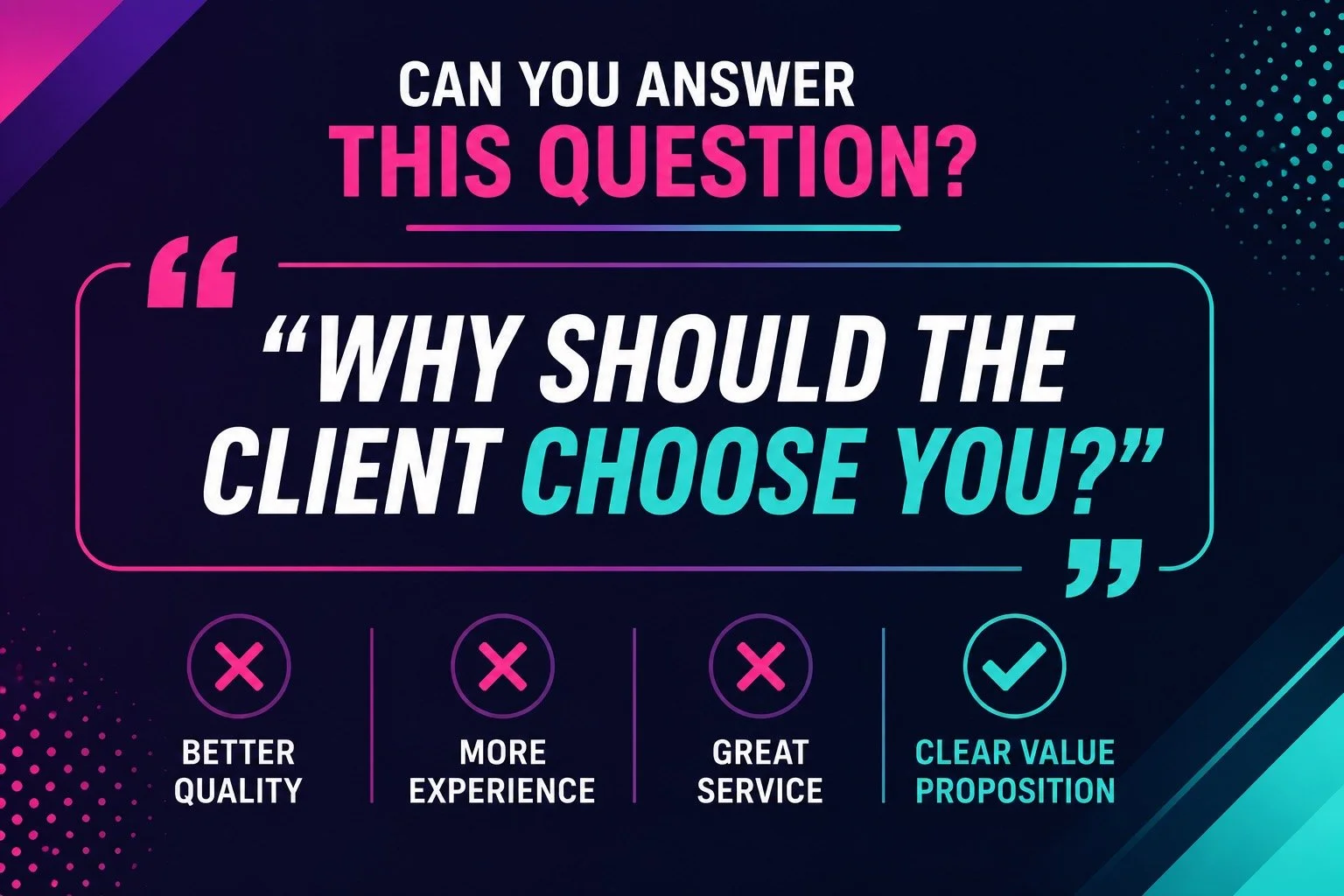
"Why should the client choose you?"
Most teams struggle to answer this one. There is often a bit of a mumble, because often the underlying thought is something like: “because they should” or “why wouldn’t they?”. I see it a lot. Teams stuck in their own little bubble. Not thinking very constructively at all in respect to the competitive edge.
Which then leads into a long list of accolades: service, company history, who the CEO is, previous clients, accreditations etc. All things which quite frankly the client doesn’t care about. The buyer is of course expecting some level of competence. This is a given.
What they really want to know is WHY they should choose you? This is often the part which is missed out. Why would they choose you over another organisation? Are you really offering the best solution to their problem? If so, tell them!
If your team cannot articulate a clear win theme in one or two sentences, your proposal is unlikely to communicate it either. This is a key point.
3. The Bid Team Is Writing in Isolation
Winning bids are rarely produced by the bid team alone, yet the responsibility is always placed upon them. In fact, it is something which becomes very noticeable at the point of evaluation. The review panel can spot a flat one-dimensional response vs a collaborative team effort.
The best submissions will always involve the whole team. I’ve said it for the longest time, the bid function sits as a pivot between all functions in a business because they are all involved: HR, operations, technical, finance, legal, business development (of course) and so much more.
When subject matter experts become unreliable throughout the lifecycle of the bid - being unresponsive, not co-operating, not treating the submission as a priority, it is a problem. A much used expression of mine is “I am 100% relying on the information you give me. Without this I have nothing.” Which is all true. The bid function can only operate successfully with the quality of information which it has to hand.
The bid team are there to facilitate the process - not to carry the entire responsibility themselves. Winning work is a team sport afterall. Your team should not be pulling all-nighters because other people haven’t been bothered to do their jobs properly. This is the reality in many organisations. These are also the businesses which never win work because of the approach they take.
If you’re in a situation where you’re scrambling for work at the last minute, there are significant gaps in the document, or you’re just not confident in the submission - you may as well not bother. If you’re not impressed by it, I’m pretty sure no one else will be. Honesty is the best policy here.
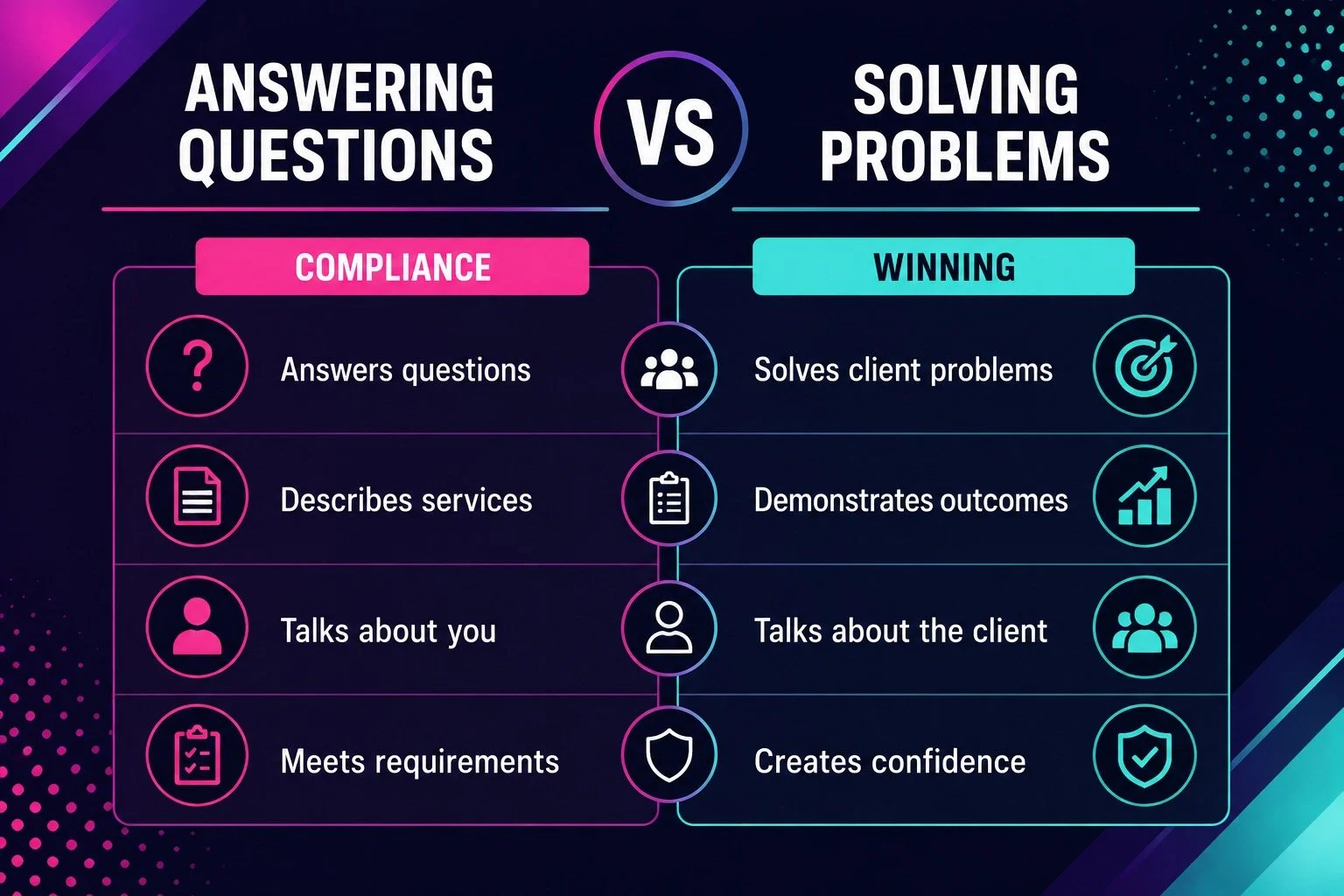
4. You're Answering Questions Instead of Solving Problems
The best approach is to sit back and think about the problems which the client wants you to solve. This is where you will find the gold. Winning an opportunity in this way is a little bit like being a detective. Questions will often skirt around the main issue, without asking you outright what they want to know. Crazy but true.
One of the biggest mistakes I see is barely answering the question which has been asked, and nothing more. This is never enough. And this is when questions are answered well. Often suppliers will only write what they want, and not even answer the question or just part of it. Then they wonder why they haven’t scored highly?!
Remember, this isn’t school. We’re not trying to impress our teacher with how many words we can write. Your job is to persuade the buyer that you are the one. This means giving them confidence that you can do the job, won’t back out on them, won’t cause issues or drama. This is the real flex and the difference between winning and losing.
Where you can gain true customer insight, this will take you a long way. For the best proposals don’t simply answer questions, this is where a lot of people get it wrong. The questions asked are just the starting off point. It is your job to expand upon your answers, think about why they are asking you the question, and show how you can resolve their problems. Ultimately, the buyer is spending a lot of money with plenty riding on it, they simply want some reassurance that your organisation is the lowest-risk choice they can make.
5. There's No Clear Bid Strategy
“Do you even have a win strategy?” - a favourite question to ask a new client as I am met with blank faces. The problem with the bid process for so many is that it is largely misunderstood. Too many companies still view it as a “bit of writing” or just something which needs to get done. Which almost always is answering questions badly. The focus is often on page limits, templates and deadlines instead of strategy.
Before writing starts, there should be some serious thought on buyer needs, how you can align with their organisation as well as what the outcome is likely to be? Some key questions to ask, might include:
What does winning actually look like?
Where are we strongest?
Where are we vulnerable?
Which evaluation criteria matter most?
How do we differentiate ourselves?
Which messages must appear consistently throughout the submission?
Without these answers, writers make assumptions as well as missing out key points. The result is usually a technically accurate response, but missing any kind of reason to say. The aspect of persuasive positioning has been lost. You always need to give the buyer a reason to choose you. Price, technical and compliance are all bare minimum requirements - none of which give you an edge.
6. Senior Leadership Only Appears at the End
The Senior Team want results, but they only get involved at the end. They are too busy with other things, but the most important concern should be winning work. And this requires their involvement. Whether it is impressing on the rest of the stakeholders how important this opportunity is or just understanding the process better from the start. This kind of involvement is always going to be better than just turning up in the last 24 hours. Because this often means major changes right before submission. Which as you can imagine becomes a stressful situation.
Senior stakeholders should be involved throughout the lifecycle of the opportunity—not simply invited to approve the final document. When leadership helps shape the strategy from day one, reviews become focused and constructive instead of reactive.
7. Winning Isn't Being Measured
If you’re running into your next opportunity blind, this is an issue. When you don’t use the data you already have in order to inform the next big opportunity, you really are missing out. You need to understand why you have won or lost in order to understand what has made the difference.
Too many organisations do a whole “throwing toys out of the pram” performance, head in the sand kind of carry on, sulk about a loss before getting back to business. This helps no one. All it means is that you are stuck in a cycle of not winning. You don’t learn from your mistakes and you keep on losing.
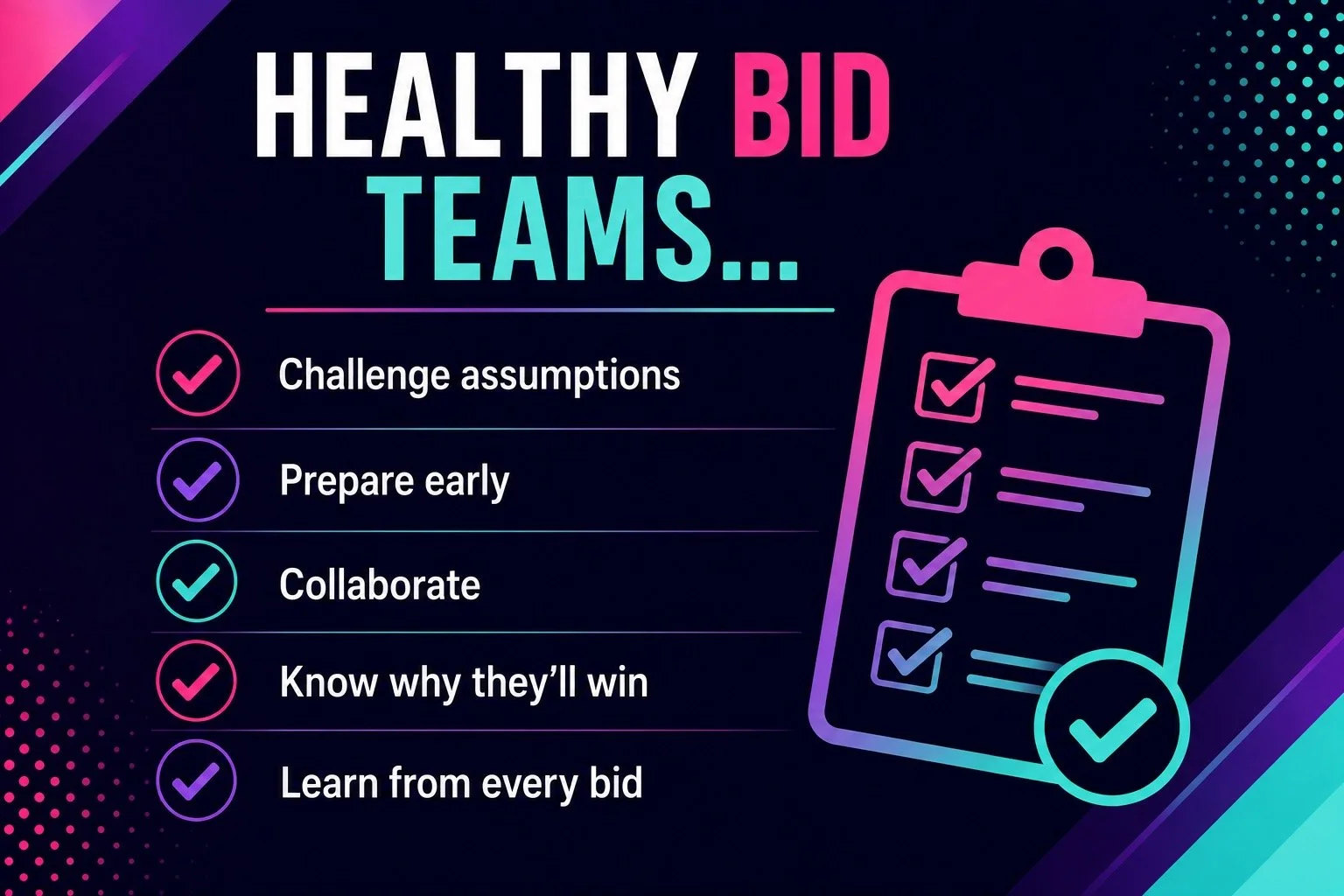
A successful organisation will create positive feedback loops, where they:
Analyse evaluation scores.
Identify recurring themes.
Challenge assumptions.
Improve their processes after every submission.
Winning consistently isn't about luck, but it is about continuous improvement.
Final Thoughts
The organisations which win consistently aren't always the biggest or the cheapest—they're the ones that prepare early, challenge their assumptions and continually improve. Every one of these red flags can be addressed through stronger strategy, better collaboration and clearer positioning. Winning more work rarely comes from writing harder; it comes from thinking differently long before the deadline arrives.
If you'd like to improve your bid outcomes, strengthen your win strategy or identify opportunities to increase your win rate, I'd love to help. Get in touch to discuss how we can position your next bid for success.