
7 THINGS SENIOR LEADERS GET WRONG ABOUT WINNING BIDS

Winning a bid is MORE THAN A BIT OF WRITING.
This is where most senior leaders go wrong with the work winning process at this level. Understanding prospects, strategy and commercial risk are all part of a winning formula, but being able to put this together is where problems often occur.
The bid process is different to a standard sales process. In the way nothing can ever be known to be true, too many variables in order to guesstimate at success. Some of the biggest mistakes come from leadership in this way, lets look at the top 7:
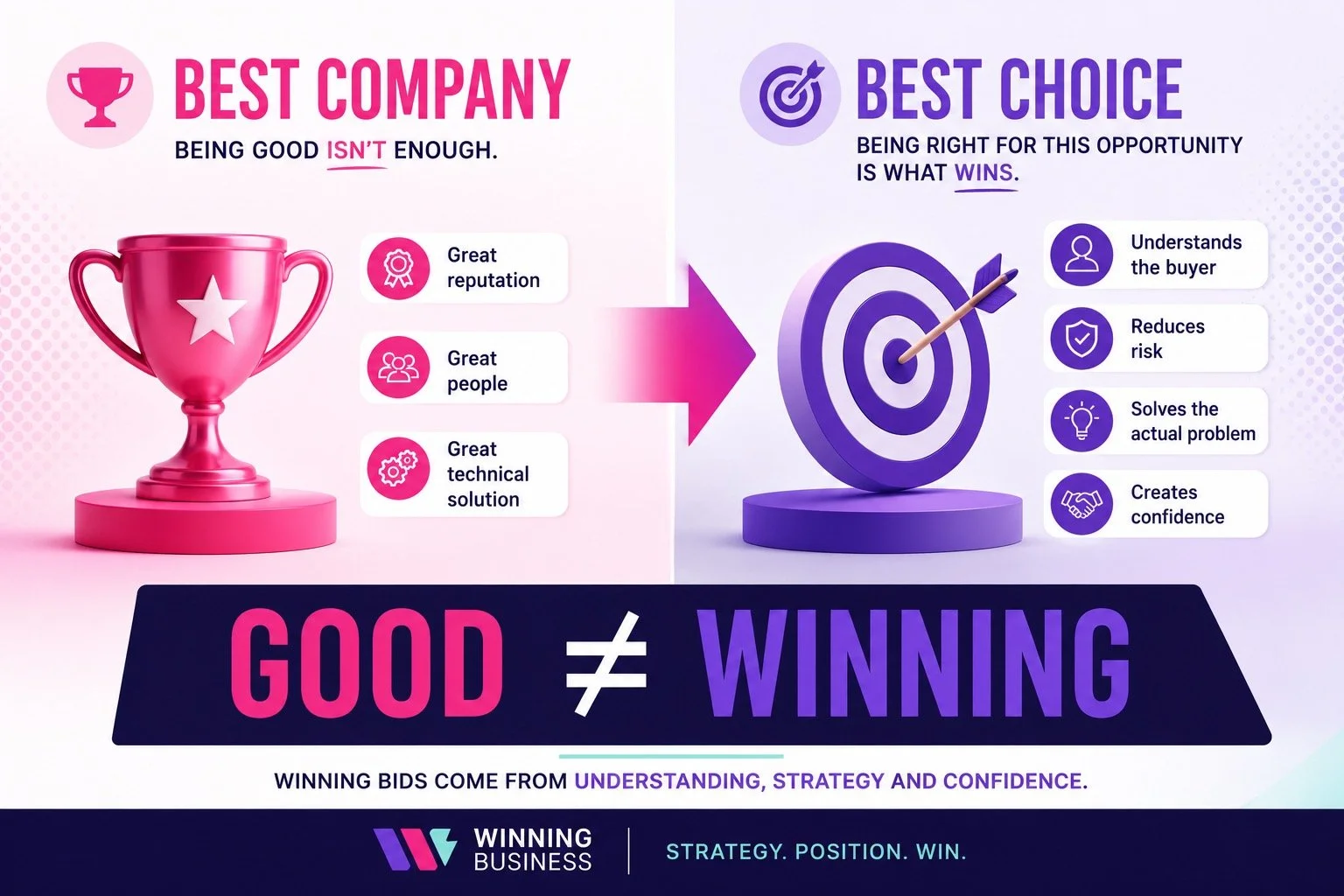
1. “If we're the best company, we'll win.”
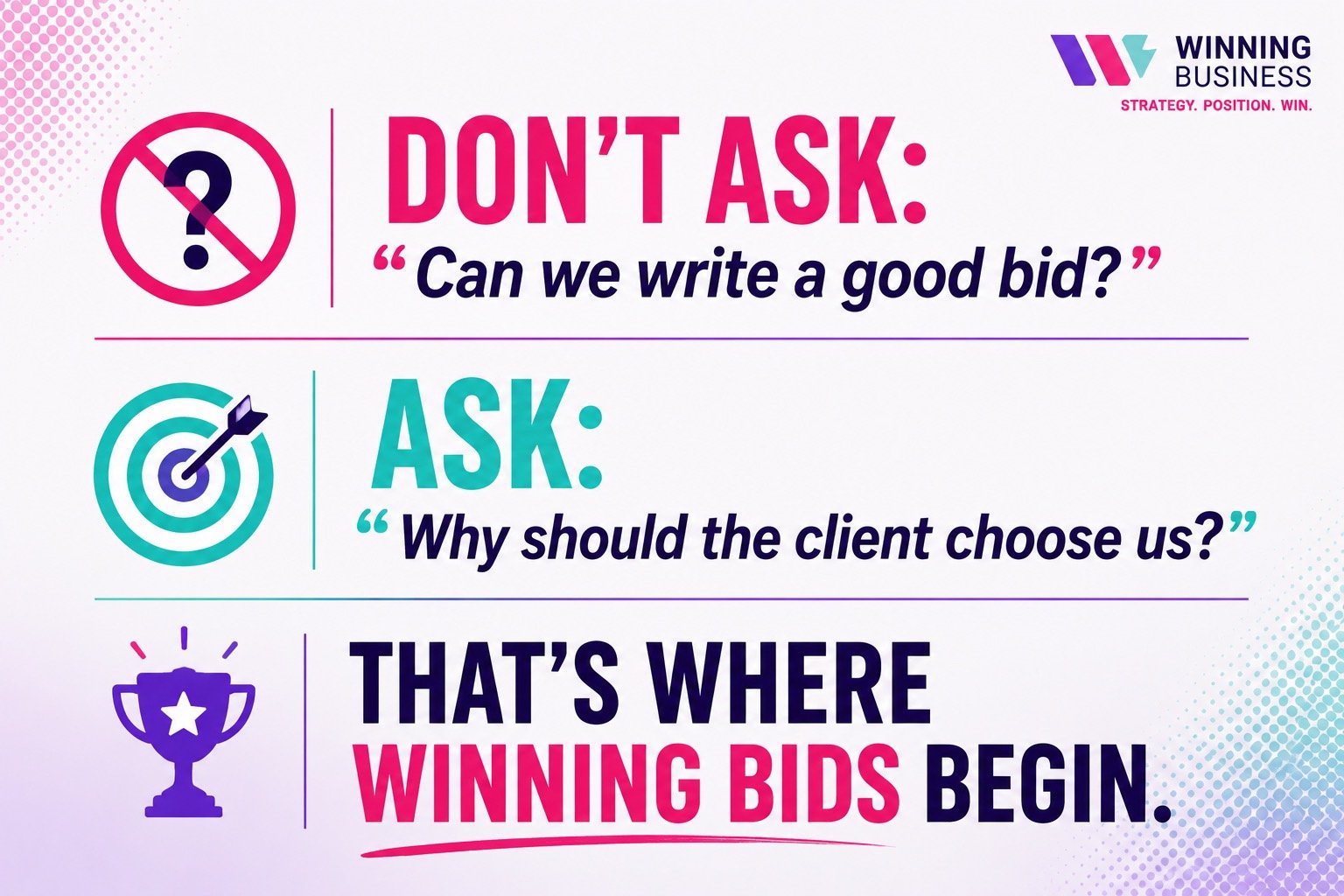
A common misconception. A nice idea of course but if you can’t demonstrate why you’re the best and just make this assumption, what then? Too many organisations presume they are the best (in their view anyway). BUt the procurement team of the buyer is really asking - “who gives us the greatest level of confidence in their ability, and the lowest form of risk?” This is what truly matters.
You might have some great credentials, client testimonials and similar work history, but what if your competitors have the same? What differentiator are you showing which really makes you stand out? Realistically the buyer wants you to understand their problems from their perspective, and with that the risks they face. Once you can do this, the likelihood of a win becomes much stronger.
Being a good option is not a win strategy in itself. Being able to show you understand their problems but also know how to fix them, will do more for your strategy than just ‘thinking’ you’re a great option.
2. “We'll decide when the tender arrives.”
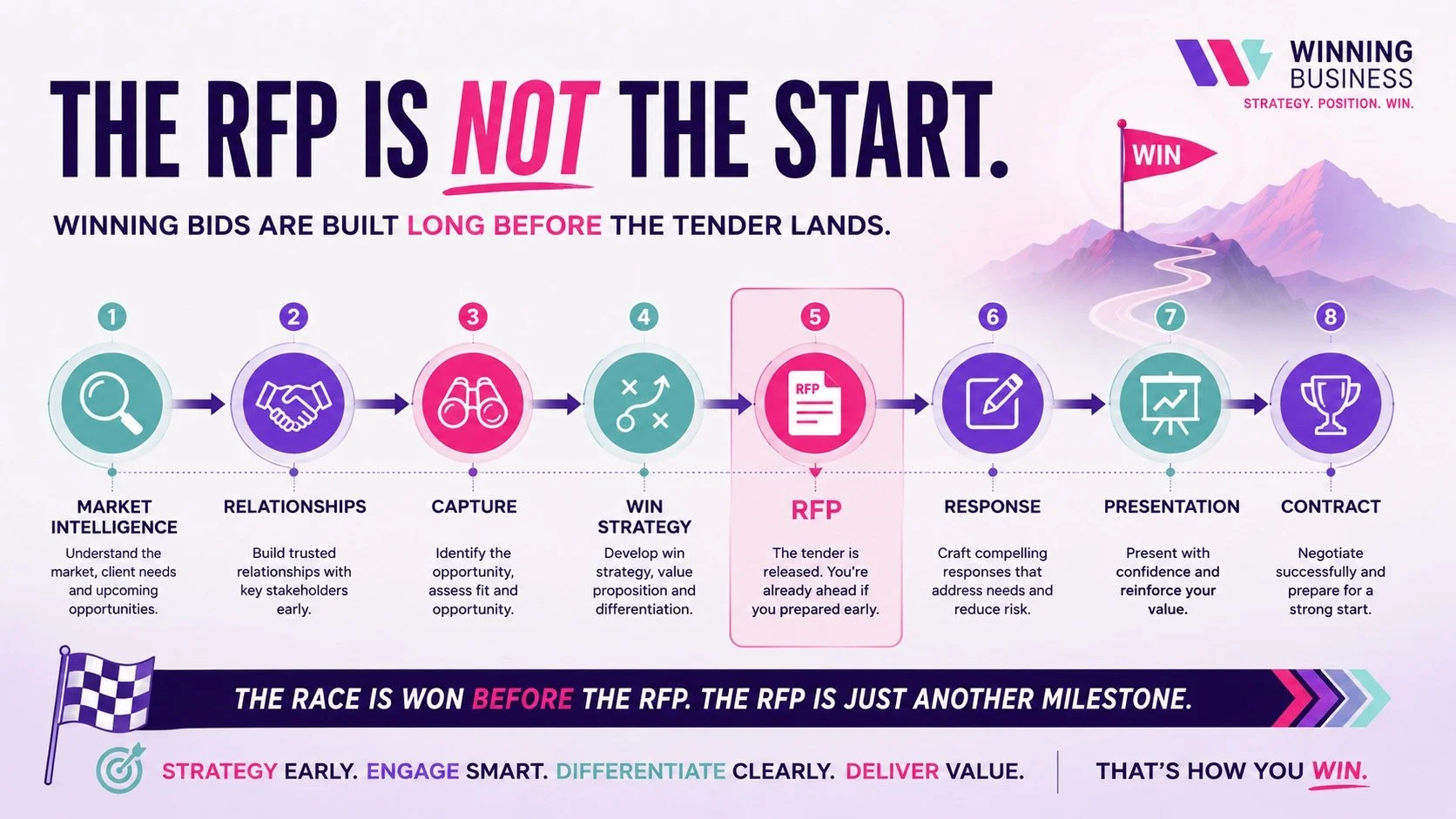
Only deciding to take action when the RFP arrives is a recipe for disaster. Submitting the RFP response is the last stage in the work winning process, not the first. If you’re not anticipating and planning for work, you have already lost.
Your bid library should be up to date. You should have collated questions from previous bids with model answers. There should always be a level up from previous attempts at winning work. This only helps you to become ready for the next one. But if you’re not doing any of this, that is an immediate red flag in itself.
Understanding the client, key decision makers, as well as all possible insights helps to understand the strategic drivers behind the procurement process. Those who win have already identified competitors and their likely evaluation priorities. Most importantly, they've developed a view of how they can win before they ever see the tender documents.
3. “Our bid team knows what the client wants.”
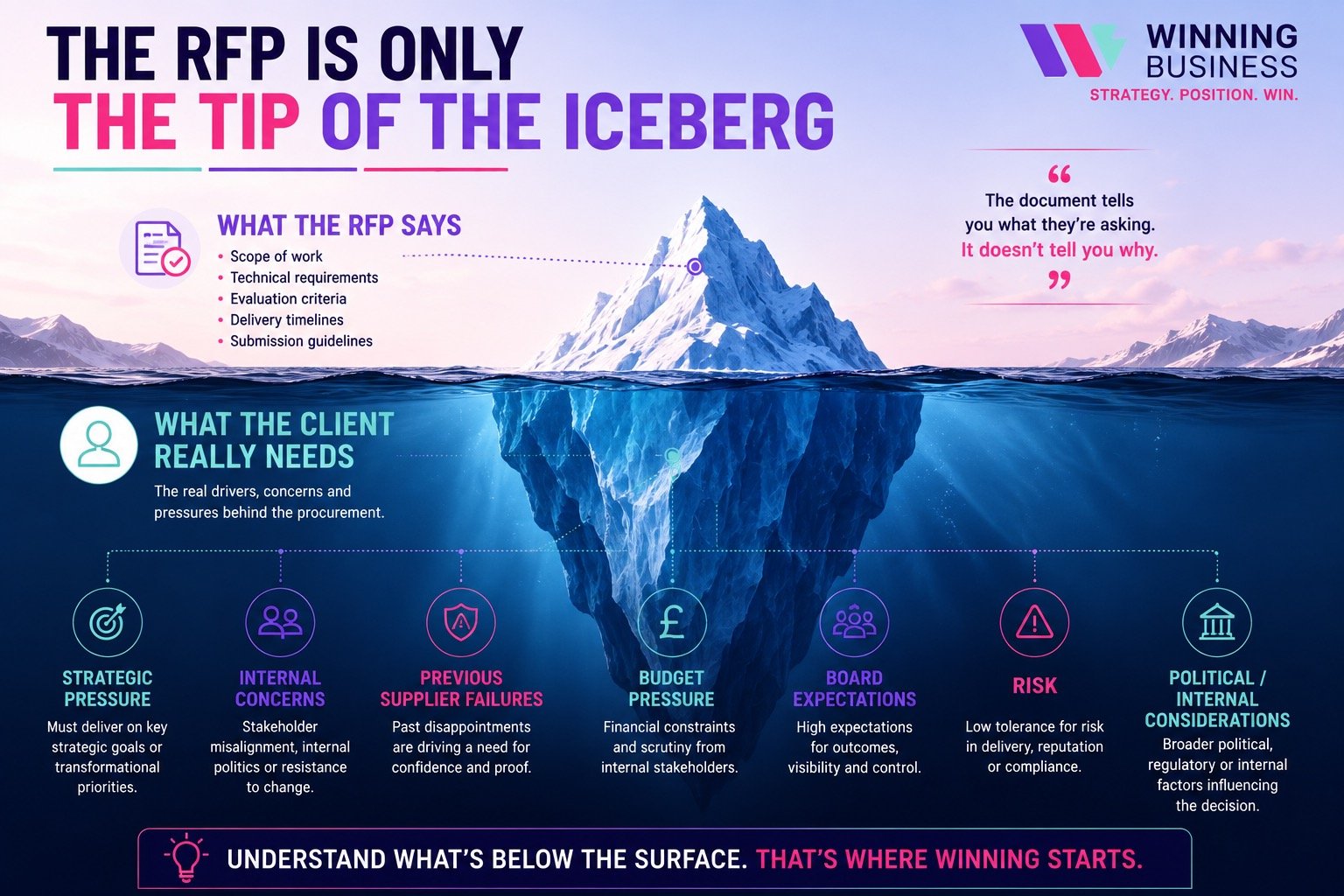
This is often a HUGE misconception. The requirements within an opportunity rarely give any real insight, that comes from your insights through interactions with the client already. If you’re blind bidding and think you still have a shot, you might want to think again!
Some of the factors which you will have to discover yourself and definitely won’t be on the evaluation criteria:
Current incumbent performance
Internal political pressures
Budget constraints
Project failures
Business direction
All of these factors directly influence the strategy which a bid takes. And without this information, it might be dead in the water before you even start. Senior teams should always be challenging their teams to look beyond the surface level questions given and find out “what the client is really asking?” That is where much of the real win strategy lives.
4. “We can reuse the last bid.”
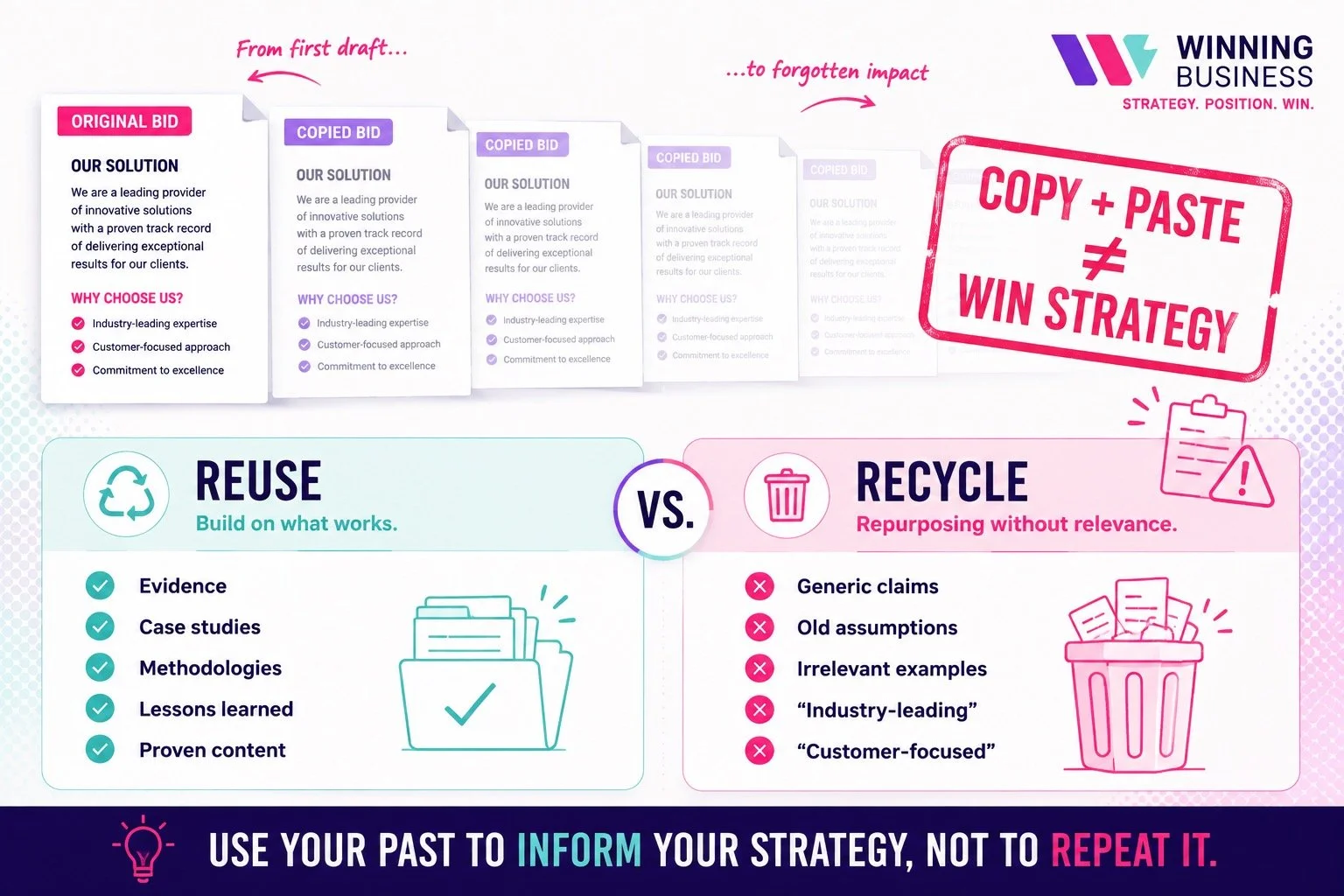
Of course you can reuse material. You always should. But there is a huge difference between copy & paste and a conscious effort to read and re-write the content. Generic content of this nature is very easy to spot.
A winning submission is always very specific and needs to make the buyer think “they understand what we need”.
5. “Price will decide it.”
Sometimes it will. But not usually. The much hyped “it comes down to price and technical” or cherry picking answers is not a winning approach. Because honestly these two criteria are factors but they are never the whole picture.
If price is the only thing which differentiates you, I’m not sure you have a real solution. A winning bid strategy goes beyond cost alone. Most procurement teams want to understand your ability to deliver and not to breach contract. Some of the questions they will ask themselves include:
Can you reduce delivery risk?
Can you accelerate mobilisation?
Can you provide better reporting?
Can you solve a problem the buyer hasn't articulated particularly well?
Can you demonstrate stronger social value, sustainability, innovation or resilience?
Can you make the buyer's internal stakeholders look good?
The objective isn't necessarily to be the cheapest. But it is to communicate that choosing you represents the strongest overall decision.
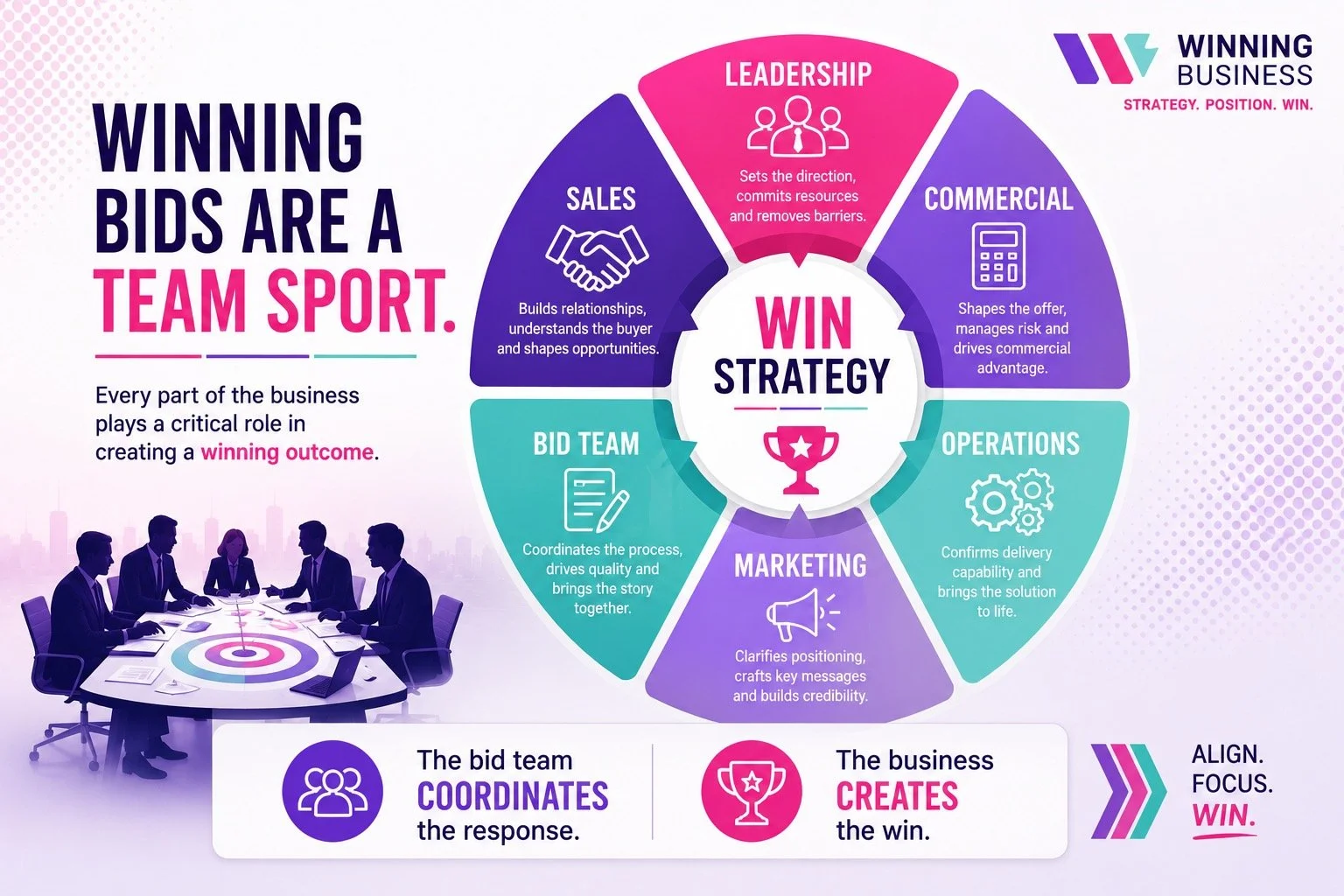
6. “The bid team owns the bid.”
This one causes enormous problems and is far from the truth. The bid team is there to co-ordinate the process, but they still input, help and guidance from every stakeholder within the business. The buck does not stop with them. They can only do so much.
Without the input of the wider team, they can’t manufacture the information required or create a miracle in the final hour when people have decided not to stick to the deadlines given. A bid response from the bid team alone is usually very flat whereas when it adequately involves the whole team, it becomes multi-dimensional.
Leader involvement is welcomed, especially in the following areas because it is always a team effort:
Strategic positioning
Client relationships
Commercial decisions
Risk appetite
Investment
Differentiation
Competitive strategy
Executive engagement
If senior leadership disappears until the final approval meeting, you're leaving some of your most valuable weapons unused.
7. “We submitted a strong bid. Now we wait.”
No. This would be a bad idea. You should always be learning. 48 hours after submission, you have given the time to breathe, you call a de-brief. Consider all the ways the bid could have been better managed if you had more time or resource in an ideal world. What would you change? The strongest organisations continue to build.
They prepare for clarification questions from the buyer, consider a presentation or negotiation strategy, contract award is not always a slam dunk, often it is a close call. The public sector is much stricter but I have had this issue with the private sector on a couple of times. Where further persuasion has been needed.
Understanding buyer challenges early on is a winning strategy. Because it really can be a huge benefit to you. Because a bid should never exist in isolation from the wider commercial strategy.
The biggest mistake?
I think we all know what that is. Treating the bid process like an admin task and nothing more. I get the impression that senior leaders think that the bid is something which just happens. Unfortunately not!
The bid function sits at a pivot point. I can project manage the process, but I also need the input from everyone else. This means HR, Marketing, Business Development, Operations, Technical & more. I am no magician, I can’t do it all on my own. As I have said many times across my career “I am 100% reliant upon the information you give me”.
When all of these functions work together, bidding becomes a genuine competitive advantage. And it shows. And it isn’t, it just isn’t. The bid team is often left high and dry trying to solve strategic problems on their own. And better writing can't fix a weak strategy.